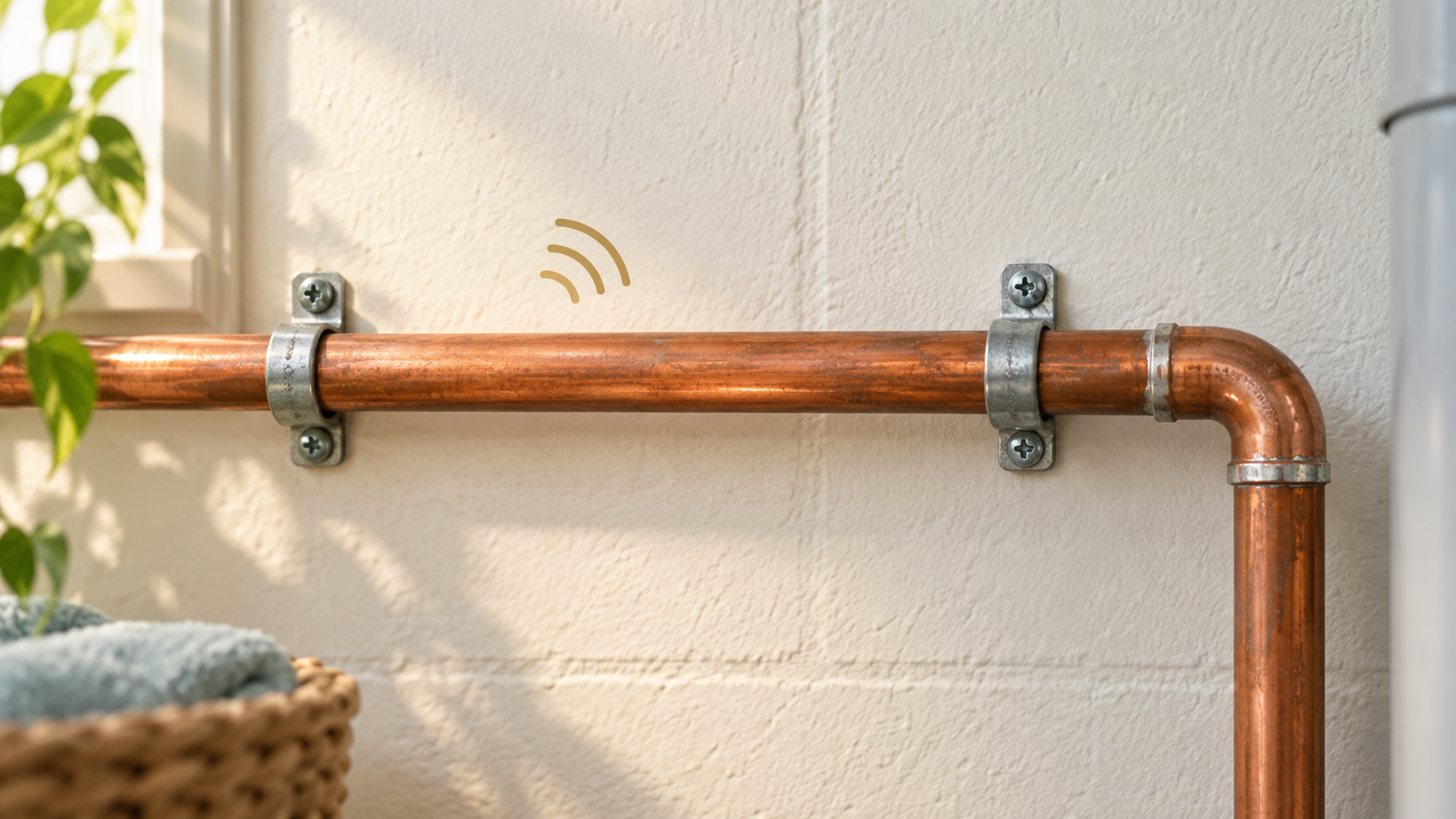
You start a load of laundry, walk away, and hear a sharp thump inside the wall. A few minutes later, it happens again. Or perhaps the kitchen faucet makes a knock every time you close it.
That sound is worth mentioning to your plumber, but it does not tell you on its own that a pipe needs replacing. The useful clue is what was happening at the exact moment of the noise. A bang when water stops, a rattle while it runs, and ticking after a hot shower can point in different directions.
For West Palm Beach homeowners, a little observation can make the next conversation about a noisy pipe much more useful.
What Water Hammer Actually Means
Water moving through a supply pipe has momentum. When a valve closes quickly, that moving water stops abruptly and creates a pressure wave in the line. The thump or bang you hear can be the result of that event, called water hammer.
Washing machines, dishwashers, and ice makers are common places to notice it because their automatic valves can close quickly. It can happen on hot or cold supply lines. Manufacturer Sioux Chief explains how quick valve closure creates water hammer and how arresters cushion that sudden change.
One useful example: if you hear the same knock each time the washer stops taking in water, tell the plumber about that timing. “It happens when the washer stops filling” is a much better starting point than “something is wrong behind the wall.”
A Bang, a Rattle, or a Tick?
Try describing the pattern before giving the noise a diagnosis.
A sharp bang as water stops: This timing fits water hammer, especially if it follows a particular appliance or faucet. It is a clue to investigate, not confirmation of a failed part.
A rattle or vibration: A pipe or hose may be moving against another surface. Loose support can make a pressure event more noticeable, and the place you hear the noise may not be where it starts.
Ticking as hot water warms a pipe or after use: Temperature changes can make piping expand and contract. Charlotte Pipe describes this source of ticking noise. It calls for a different assessment from a sudden shutoff bang.
If the sound seems to come from the water heater itself, note that too. A noise inside the tank is a different observation from a thump in the supply line.
Four Things to Note Without Taking Anything Apart
You do not need to pull the washer away from the wall or open a cabinet full of connections to collect useful information.
- Which fixture was in use? Note whether the noise follows the washer, dishwasher, a particular faucet, or several fixtures.
- When does it happen? Write down whether water is starting, flowing, or stopping. For a faucet, note whether you were using hot or cold water.
- What changed recently? Mention a new appliance, fixture replacement, or recent plumbing work, even if you are unsure it is connected.
- Is anything visibly wet? From an accessible, dry location, look for a drip, fresh staining, or pooling water. Leave moving appliances and opening walls to the professional.
A short recording during normal use can help if the noise is intermittent. There is no need to repeatedly snap valves shut to recreate it.
The Repair Should Follow the Diagnosis
A plumber may check accessible pipe supports, the fixture or appliance valve, existing arresters, and the home’s water pressure. More than one condition can contribute to the sound.
High supply pressure can contribute to water hammer, while unsecured lines can add knocking or vibration. Oatey’s technical guide covers pressure checks, pipe support, and arrester placement. These are reasons to assess the system before choosing a part.
When an arrester is appropriate, it provides a cushion for the sudden pressure change near the valve that closes quickly. Its size and location matter. An arrester, a correction to pipe support, and work on a pressure regulator address different conditions; they are not interchangeable fixes.
Avoid adjusting a pressure regulator or loosening supply connections based on the noise alone. Ask what was found and how the proposed repair addresses it. You should be able to understand that explanation before deciding what to do.
When to Call Integrity
Arrange a plumbing check if the banging keeps returning, becomes stronger, or starts after an appliance or fixture change. Repeated water hammer can stress plumbing components, so it is worth addressing even when you do not see a leak.
If there is active leaking or pooling water, stop using the affected fixture and request prompt plumbing help. Shut off its water only if you know the correct valve and can reach it safely without forcing it.
At Integrity Plumbing & Drain, we can investigate noisy supply lines and explain the repair options. Tell us what you hear and when it happens. Our plumbing repair service in West Palm Beach is a good place to start.