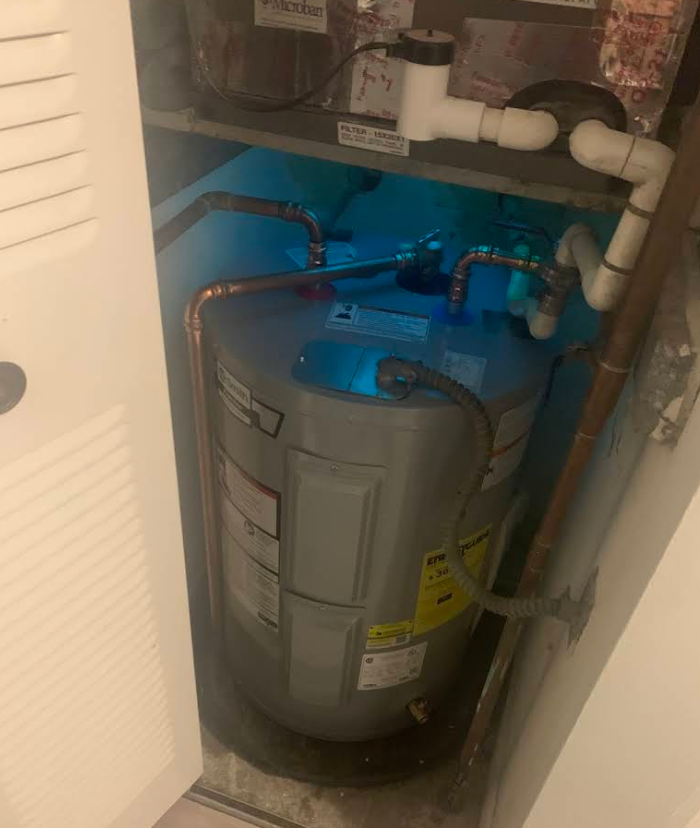
A Leaking Water Heater Is Never a Good Sign
Walking into your garage or utility closet and discovering a puddle of water around the base of your water heater is one of those moments that immediately raises your stress level. Is it a minor drip or a sign that the entire tank is about to fail?
The good news is that not every water heater leak is a catastrophe. Some can be repaired quickly and affordably by a water heater repair professional. Others, however, signal that it is time for a full replacement. Understanding why hot water heaters leak can help you react faster, reduce damage, and make smarter decisions about your next steps.
The Most Common Reasons Hot Water Heaters Leak
Sediment Buildup at the Bottom of the Tank
West Palm Beach has notoriously hard water. Over time, dissolved minerals settle at the bottom of your water heater tank and form a thick layer of sediment. This buildup insulates the water from the burner or heating element, forcing the unit to work harder and run longer to heat the water.
The excess heat damages the inner lining of the tank. Eventually, tiny cracks form in the bottom of the tank, and water begins to seep through. This is one of the most common reasons we see tank failures in our area.
Prevention tip: Flushing your water heater once or twice a year helps remove sediment before it causes damage. This simple maintenance step can extend the life of your unit by several years.
Corroded Anode Rod
Inside every tank water heater there is a sacrificial anode rod. This rod is designed to attract corrosive minerals in the water so they attack the rod instead of the tank walls. Over time, the rod dissolves completely. Once it is gone, the minerals start corroding the tank itself.
In hard water areas like West Palm Beach, anode rods wear out faster than they do in other parts of the country. Replacing the anode rod every three to five years is one of the most effective and affordable ways to prevent tank leaks.
Excessive Tank Pressure
Water heaters have a temperature and pressure relief valve, often called a T and P valve, that is designed to release excess pressure from the tank. If this valve malfunctions or if the pressure inside the tank exceeds safe levels, the valve will open and release hot water.
Common causes of excessive pressure include a thermostat set too high, incoming water pressure from the municipal supply that exceeds recommended levels, or a faulty expansion tank. If you notice water dripping from the T and P valve, do not ignore it. This is a safety feature telling you that something is wrong.
Loose or Corroded Fittings
The inlet and outlet connections at the top of the water heater can loosen over time due to thermal expansion and contraction. Corroded fittings, worn washers, and deteriorated supply lines are all common sources of leaks around the top of the unit.
These are often straightforward repairs that a water heater repair professional can handle in a single visit. Identifying leaks early at connection points prevents water from running down the tank and causing floor damage.
A Cracked Tank
When the interior lining of the tank develops cracks, whether from sediment damage, corrosion, or age, the tank itself begins to leak. Once the tank is cracked, there is no repair. A full replacement is the only option.
Most tank water heaters have a lifespan of about 8 to 12 years. If your unit is approaching that age range and you notice moisture around the base, it is very likely that the tank has reached the end of its useful life.
Tankless Water Heaters: Do They Leak Too?
Tankless water heaters do not store water, so they do not carry the same risk of a catastrophic tank failure. However, they can still develop leaks at connection points, heat exchanger seals, or from condensation issues.
If you are considering a tankless water heater installation, one of the major advantages is the reduced risk of flooding from a sudden tank failure. Tankless units also last significantly longer than traditional tanks, often 20 years or more with proper maintenance.
Our team provides professional tankless water heater installation service for both gas and electric models. We help you size the right unit for your home, handle all permits, and ensure proper installation to manufacturer specifications.
When to Repair vs. When to Replace
Not every leak means you need a new water heater. Here is a general guide to help you decide.
A repair may be all you need if:
- The leak is coming from a fitting or connection at the top of the unit
- The T and P valve is dripping but the tank itself is structurally sound
- The anode rod needs replacement and the tank shows no corrosion
- The unit is less than 8 years old and in otherwise good condition
Replacement is likely the better option if:
- Water is leaking from the bottom or body of the tank
- The tank is 10 years old or older
- You are noticing rusty hot water at multiple fixtures
- Repair costs are approaching half the price of a new installation
Final Thoughts
A leaking water heater is not something to ignore. Even a small drip can lead to significant water damage, mold growth, and increased utility costs if left unaddressed.
If you notice water around your hot water heater, the team at Integrity Plumbing and Drain can diagnose the problem and give you honest options. Whether you need a simple repair, an anode rod replacement, or a brand new tankless water heater installation, we provide transparent pricing and same day service throughout West Palm Beach and Palm Beach County. Call us at 561-310-6435 to schedule a visit today.