Why West Palm Beach Water Is So Hard on Your Home
If you have ever noticed a chalky white film on your shower doors, crusty buildup around your faucets, or soap that just refuses to lather properly, you are not imagining things. You are experiencing the effects of hard water.
West Palm Beach and the surrounding areas of Palm Beach County sit on top of limestone aquifers. As groundwater filters through these rock formations, it absorbs high concentrations of calcium and magnesium. By the time the water reaches your tap, it carries significantly more dissolved minerals than the national average. The result is water that is technically safe to drink but quietly causes damage throughout your entire plumbing system.
What Hard Water Actually Does to Your Home
Hard water problems do not appear overnight. They build up gradually, which is why many homeowners do not realize the damage until it becomes expensive to fix.
Scale Buildup Inside Pipes. Over months and years, minerals in hard water deposit along the interior walls of your pipes. This is especially common in hot water lines where heat accelerates mineral crystallization. As the scale thickens, your pipe diameter shrinks. Water pressure drops, flow rates decrease, and your plumbing system has to work harder to deliver water to every fixture.
Shortened Appliance Lifespan. Your water heater is the appliance hit hardest by mineral buildup. Sediment settles at the bottom of the tank and hardens into a thick layer that insulates the heating element from the water. This forces the unit to run longer, consume more energy, and ultimately fail years before its expected lifespan. Dishwashers, washing machines, and ice makers all face similar problems.
Damaged Fixtures and Surfaces. Those white spots on your glass shower doors, the green stains around your faucet bases, and the rough texture building up inside your toilet bowl are all mineral deposits. Beyond looking bad, this buildup can corrode fixtures and eat away at rubber seals and washers, leading to drips and leaks.
Dry Skin and Dull Hair. Hard water makes it difficult for soap and shampoo to rinse away completely. That film you feel on your skin after a shower is not leftover soap. It is a combination of soap and mineral residue. Over time, this can irritate sensitive skin and leave hair looking flat and lifeless.
The DIY Hard Water Test
Not sure if your water is hard? Here is a simple test you can do right now with a clear plastic bottle.
- Fill the bottle about one third of the way with tap water.
- Add a few drops of dish soap.
- Seal the bottle and shake it vigorously for ten seconds.
- If the water produces a thick layer of bubbles that holds its shape, your water is relatively soft. If the water turns cloudy with very few bubbles, you likely have hard water.
For a more precise measurement, you can purchase an inexpensive test strip kit from any hardware store. Water hardness is measured in grains per gallon. Anything above 7 GPG is considered hard, and many West Palm Beach homes test well above that range.
Filtration Solutions: What Actually Works
Store bought faucet filters and pitcher systems can improve the taste of your drinking water, but they do nothing to protect your pipes, water heater, or appliances from mineral damage. To address the root cause, you need a system that treats the water as it enters your home.
Whole House Water Filtration
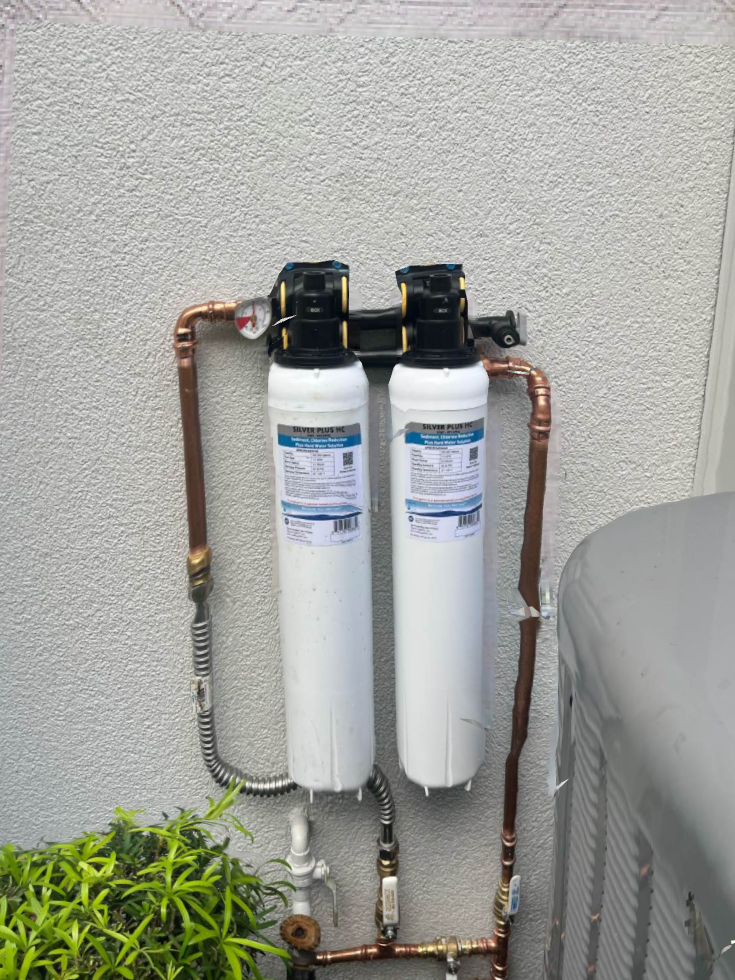
A whole house system is installed at your main water line so every drop of water that enters your home is treated. This protects your plumbing infrastructure, your appliances, and every faucet and showerhead in the house. Modern systems like the Halo series combine multiple filtration stages to address hardness, chlorine, sediment, and other contaminants in a single unit.
Water Softeners vs. Water Conditioners
Traditional water softeners use salt to remove calcium and magnesium through ion exchange. They are effective but require regular salt refills and produce brine discharge. Salt free water conditioners use a different approach. They alter the structure of mineral crystals so they cannot stick to surfaces. This prevents scale buildup without adding sodium to your water. For most West Palm Beach homes either option works well, and the best choice depends on your specific water chemistry and preferences.
When to Call a Professional
If you are noticing multiple signs of hard water damage in your home, it is worth having a professional evaluate your water quality and your plumbing. A qualified plumber can test your water, inspect your pipes and water heater for existing scale damage, and recommend the right system for your home size and water usage.
Installation matters just as much as the equipment itself. A poorly installed system can restrict water pressure or create bypass issues that leave parts of your home unprotected. Our licensed technicians ensure proper placement, correct sizing, and seamless integration with your existing plumbing.
Final Thoughts
Hard water is one of those problems that is easy to ignore until the repair bills start adding up. A cracked water heater, corroded fixtures, and restricted pipes are all preventable with the right filtration system.
If you are tired of scrubbing mineral stains, replacing faucet parts, or worrying about what is building up inside your pipes, the team at Integrity Plumbing & Drain can help you find the right solution. We install and service whole house water filtration systems throughout West Palm Beach and Palm Beach County to keep your water clean and your plumbing protected. Hard water also shortens the life of your water heater — learn more about why water heaters leak and how filtration can help.