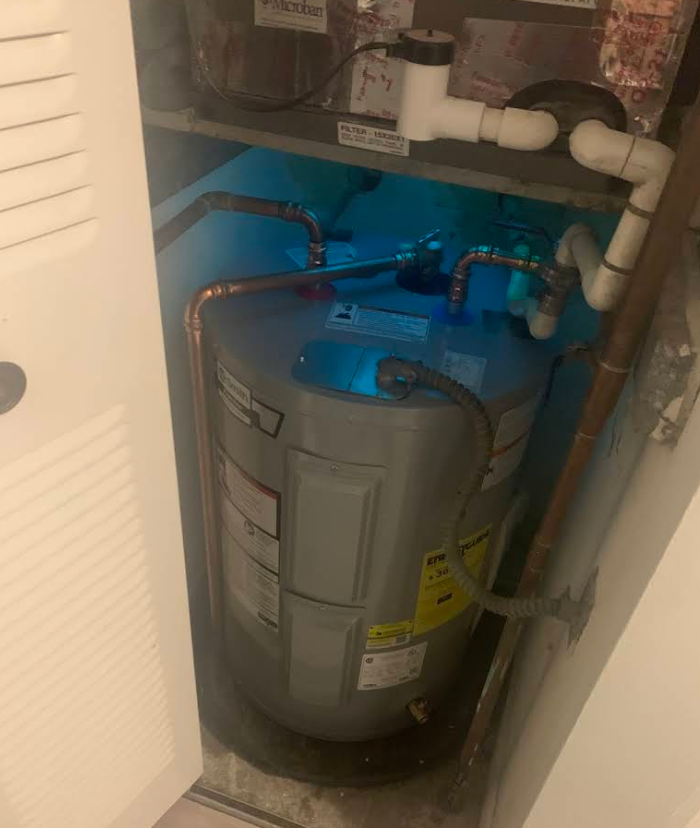
The Sediment Pile You Cannot See
Most homeowners never think about what is happening inside their water heater. As long as the shower runs hot in the morning, the tank is doing its job. Out of sight, out of mind.
But every gallon of water that has entered your water heater since the day it was installed has left a little something behind. In West Palm Beach, where our tap water carries some of the highest mineral content in Florida, that “something” is a hardening layer of calcium and magnesium settling across the bottom of your tank.
By year five, that layer can be inches deep. By year eight, it can be insulating the heating element so badly that your unit runs twice as long to heat the same amount of water. And by year ten, it is often the reason your tank cracks, leaks, and fails years before it should.
A yearly water heater flush is the single cheapest piece of maintenance you can do to extend the life of your tank. It costs less than one emergency repair and can buy you years of additional service from the unit you already own.
What Sediment Actually Does to Your Water Heater
The damage from sediment is gradual and invisible, which is why so many homeowners never realize how much it is costing them until the tank fails.
It forces your heater to work harder. A layer of sediment acts like a thermal blanket between the burner or heating element and the water above it. The heat source runs longer to push energy through that sediment and into the water. Your gas or electric bill creeps up year after year, and you assume it is just utility rate increases.
It bakes the bottom of the tank. On a gas water heater, the burner heats the steel floor of the tank. When sediment insulates the water from the steel, that floor gets significantly hotter than it was designed for. Over time the metal weakens, develops microscopic cracks, and eventually fails completely. This is one of the most common causes of catastrophic tank leaks we see in West Palm Beach.
It makes loud popping and rumbling sounds. Ever heard your water heater make banging noises when it runs? That is steam trapped underneath the sediment layer trying to escape. It is also the sound of your tank slowly tearing itself apart from the inside.
It clogs your hot water lines. Loose chunks of sediment break free and travel through your hot water plumbing. They can lodge in faucet aerators, shower heads, dishwasher inlet screens, and washing machine valves. If your hot water flow has gotten weaker over the years, sediment is likely part of the problem.
It kills your anode rod faster. The sacrificial anode rod inside your tank is designed to corrode in place of the steel walls. When sediment buildup raises the temperature of the lower portion of the tank, the anode burns out faster. Once it is gone, the tank itself starts to corrode. We covered this in detail in our post on why hot water heaters leak.
Why West Palm Beach Tanks Need This More Than Most
We have written about this before in our guide on how hard water damages your plumbing, but it bears repeating. West Palm Beach sits on limestone aquifers, and our tap water carries far more dissolved calcium and magnesium than the national average.
The standard recommendation is to flush a tank water heater once a year. In South Florida, with our mineral content, once a year is the floor, not the goal. Many homes do even better with a flush every six to eight months.
Snowbird homes are a special case. A water heater that sits running at 120 degrees for six months while you are up north, with nobody using hot water, is essentially a slow cooker for sediment. We routinely pull tanks out of seasonal homes that look ten years older than their actual age, simply because they were never flushed and were left running on a fixed schedule year after year.
Warning Signs Your Tank Is Overdue
You do not need a plumber to spot the symptoms of sediment buildup. Watch for any of the following:
- Popping, rumbling, or banging sounds when the heater is running
- Reduced hot water capacity, where a 15 minute shower has quietly become 8
- Rusty, brown, or cloudy hot water at the tap when you first turn it on
- Hot water taking noticeably longer to arrive at distant fixtures
- A water heater that runs longer or more often than it used to
- Higher gas or electric bills with no change in your household usage
- Visible sediment in the bucket when you open the drain valve at the base of the tank
If you are seeing any of these and your tank has not been flushed in the last year, or has never been flushed at all, it is time. The good news is that catching it early, before the tank cracks, costs a small fraction of what a replacement does.
DIY Flush vs Professional Flush
A water heater flush is one of the few plumbing maintenance tasks a handy homeowner can attempt on their own. There are dozens of YouTube videos walking through the process. That said, there are a few reasons a professional flush is usually the better call.
Drain valves seize. The plastic drain valve at the bottom of most residential water heaters is famous for cracking, snapping, or refusing to close again once it has been opened. If yours has not been touched in eight years, there is a real chance opening it ends with a flooded garage and an emergency service call.
Sediment can clog the valve mid-flush. A heavy sediment load can completely block the drain valve while the tank is half empty. Clearing it without making a mess requires the right tools and a way to safely catch hot, dirty water in the middle of the process.
The flush is only half of the service. A proper professional flush also includes checking the anode rod, testing the T&P relief valve, inspecting the expansion tank, verifying shut off valve function, and looking for early signs of corrosion. These are the same components we grade on our Home Evaluation checklist, and skipping them defeats most of the value of the visit.
Tankless is a different process entirely. Tankless water heaters do not have a tank to drain. They need a descaling flush using a circulation pump, an approved descaling solution, and the proper isolation valves. If your tankless unit has never been descaled, the heat exchanger is almost certainly scaling up right now, and that is the single most expensive part to replace in the unit.
What Our Water Heater Flush Service Includes
When our team performs an annual water heater flush, we do not just drain the tank and call it done. Here is what is included in every visit:
- Safe power and gas shutdown following manufacturer-recommended cooldown procedures
- Full tank drain with a sediment evaluation. We will show you what came out
- Cold water flush cycle to break loose remaining mineral deposits
- Drain valve test with a quote for replacement if the existing valve is failing
- Anode rod inspection with a clear replacement recommendation if the rod is exhausted
- T&P relief valve test to confirm it opens and reseats properly
- Expansion tank pressure check to make sure it is still doing its job
- Shut off valve verification on both the cold water inlet and the gas or electric supply
- Flood stop and drain pan inspection for leak protection
- Documented findings on our color coded Home Evaluation sheet so you have a record of the tank’s condition
For tankless units, our service includes isolating the unit, connecting a circulation pump, running a descaling solution through the heat exchanger, flushing the inlet filter, and verifying combustion or electrical performance once the service is complete.
How Often Should You Flush in South Florida?
For most West Palm Beach homes, the right cadence is:
- Standard tank water heater: once a year
- Tank in a snowbird or seasonal home: once a year minimum, with a pre-departure shutdown if you are leaving for more than a month
- Tankless water heater: once a year for descaling, plus an inlet filter clean
- Homes with a whole house water filtration system: every 18 to 24 months is usually fine
The single best thing you can do to extend the life of your tank is pair an annual flush with a whole house filtration system. Filtration cuts the mineral content entering the tank, and the flush removes whatever still settles. Together they can push a tank’s useful life well past the typical 8 to 12 year window.
Final Thoughts
A water heater flush is one of those services that feels easy to put off. The tank is still working, the water is still hot, and nothing visibly bad is happening, until one morning it is.
In West Palm Beach, our hard water makes annual flushing one of the highest return maintenance tasks a homeowner can invest in. A flush costs a fraction of a replacement, takes less than an hour in most homes, and can add years to a unit you would otherwise be replacing on a Sunday morning in a panic.
At Integrity Plumbing and Drain, our annual water heater flush service comes with a full inspection of the components that matter most, all documented on the same checklist our techs use for our complete Home Evaluation. If your tank has not been flushed in the last year, or you have never had it done at all, call us at 561-310-6435 to schedule a visit. Learn more about our water heater repair and water heater installation services, and let us help you get the most out of the heater you already own.