Your Plumbing Is Talking. Are You Listening?
Here is a fun fact most people learn the hard way: by the time you notice a plumbing problem, it has usually been brewing for weeks, months, or even years. That slow drip under the bathroom sink? It has been quietly warping your cabinet floor. That water heater in the garage? It might be one bad morning away from turning your floor into a swimming pool.
A home plumbing evaluation is like a wellness check for your house. Instead of waiting for something to break and scrambling to find a plumber at midnight, you get a clear picture of what is working, what needs attention, and what is on its last legs, all before anything goes wrong.
At Integrity Plumbing and Drain, we built our Home Evaluation to be one of the most thorough plumbing checkups in West Palm Beach. We are not just peeking under a sink and saying “looks good.” We are testing, documenting, and grading the accessible plumbing components throughout your home.
How Our Inspection Works
We break the inspection into three major areas: your water heater, your kitchen plumbing, and your bathrooms. Each component gets a simple color-coded grade so you can see exactly where things stand at a glance.
🟢 Green means everything looks great. No action needed.
🟡 Yellow means it is still working but showing signs of wear. Keep an eye on it or plan a repair soon.
🔴 Red means there is an issue that needs to be addressed now before it turns into something bigger and more expensive.
No confusing jargon. No guessing. Just a clear, honest report you can actually understand.
Water Heater: The Appliance You Forget About Until It Floods Your Garage
Let’s be honest, nobody thinks about their water heater until the hot water runs out or there is a puddle on the floor. But your water heater works harder than almost anything else in your home, and in South Florida’s hard water, it takes a beating.
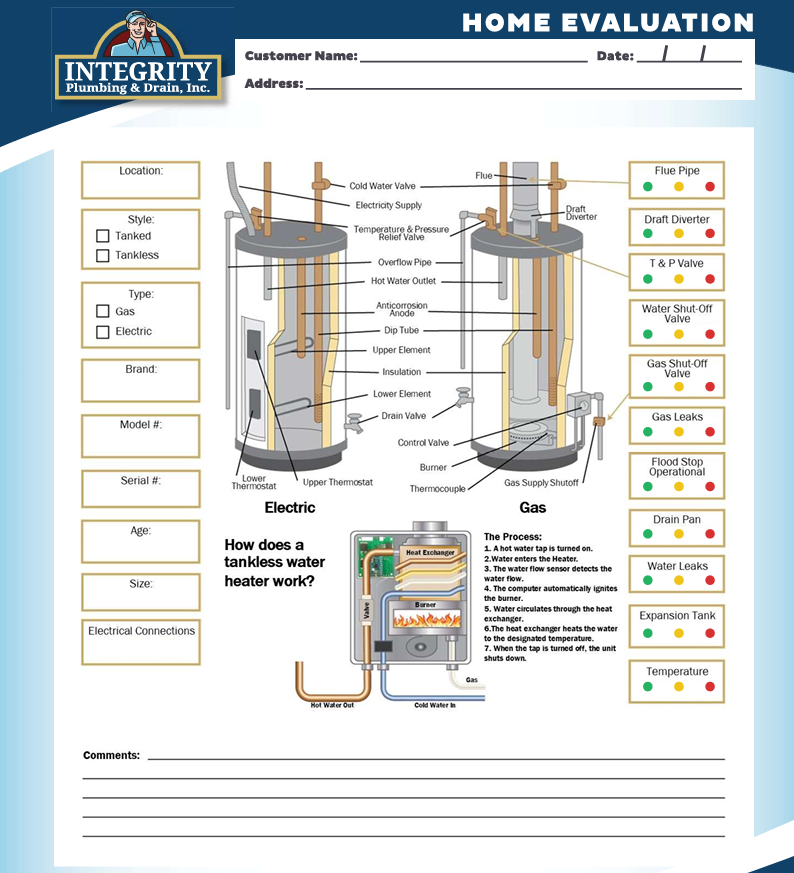
Our water heater evaluation covers both traditional tank systems and tankless units. Here is what we check:
- Flue pipe and draft diverter making sure combustion gases are venting safely outside your home
- T&P valve this is the safety valve that prevents your tank from becoming an overpressurized disaster. We make sure it works
- Shut-off valves both water and gas so you can isolate the unit quickly in an emergency
- Gas leak testing using professional detection equipment, not guesswork
- Flood stop device checking if your unit has automatic shut-off protection in case of a leak
- Drain pan looking for signs that water has already been escaping
- All connections and fittings anywhere water can sneak out, we check it
- Expansion tank verifying proper pressure management
- Temperature settings too high wastes energy and creates scalding risk, too low breeds bacteria
- Anode rod this sacrificial rod protects your tank from corrosion. When it is gone, your tank starts eating itself from the inside
We also record your unit’s brand, model, serial number, age, and size. If your water heater is getting up there in years, we will let you know so you can plan a replacement on your terms instead of dealing with a surprise failure on a Sunday morning.
Kitchen Plumbing: More Going On Under That Sink Than You Think
Open the cabinet under your kitchen sink sometime. There is a whole city of pipes, valves, and connections down there, and most of it never gets a second look until something starts leaking or smelling funny.
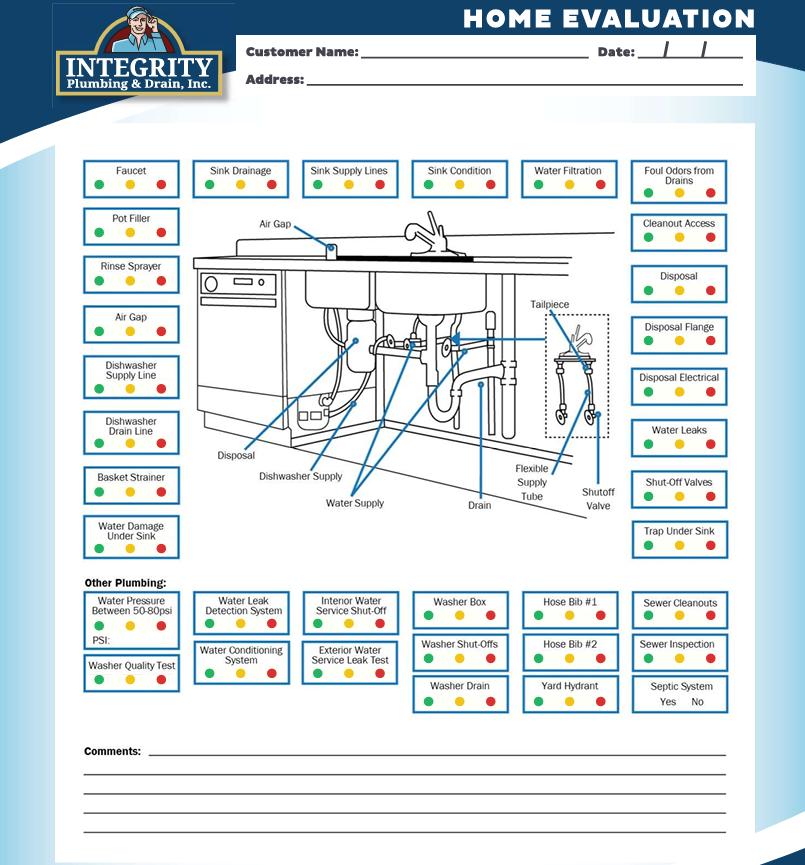
Here is what we inspect in the kitchen:
- Faucets, pot fillers, and rinse sprayers checking for drips, weak flow, and worn-out parts
- Sink drainage slow drains are usually the first warning sign of a developing clog
- Supply lines these flexible hoses are one of the most common sources of sudden flooding when they fail. We check every one
- Sink condition cracks, chips, and failing sealant around the basin
- Water filtration system making sure your filter is doing its job and not overdue for a change
- Drain odors a stinky drain usually means biofilm buildup or a venting problem
- Dishwasher air gap this little device on your countertop prevents dirty water from backing up into your dishwasher. Most people do not even know what it does
- Dishwasher supply and drain lines looking for leaks, kinks, or aging connections
- Garbage disposal testing operation, checking the flange, and inspecting the electrical
- Basket strainer a worn-out strainer seal is a sneaky source of under-sink leaks
- Water damage under the sink stains, warping, and mold are telltale signs of a leak you did not know about
- Shut-off valves you would be surprised how many shut-off valves in homes are frozen in place and would not actually shut off if you needed them to
- Trap checked for corrosion and proper installation
But we do not stop at the kitchen sink. We also check the bigger picture:
- Water pressure we test it to make sure it falls in the safe 50 to 80 PSI range. Too high and your pipes and fixtures are under constant stress
- Leak detection system if you have one, we make sure it is actually working
- Water conditioning system hard water is brutal on plumbing in our area
- Main water shut-offs inside and outside. Do you know where yours are? We make sure they work
- Washer connections washing machine hose failures are one of the top causes of home flooding. We check the box, hoses, and shut-offs
- Hose bibs your outdoor spigots get checked for leaks and backflow protection
- Sewer cleanouts we locate them and make sure they are accessible
- Sewer line condition a quick visual assessment of your main drain. Camera inspections are not included in the standard evaluation but can be added for an additional cost. Keep in mind that even with a camera, some areas like tub and shower drains are typically not reachable with sewer camera equipment
- Septic system noted and evaluated if applicable
If we spot something concerning with your water pressure or suspect a hidden leak, we can arrange specialized third-party locating. That work has a separate scope and charge from the evaluation. We review the findings and provide a separate written estimate for any plumbing repair.
Bathrooms: Where Small Problems Love to Hide
Bathrooms are ground zero for plumbing wear and tear. Think about it: showers running daily, toilets flushing dozens of times a week, and all that moisture creating the perfect environment for slow, hidden damage.
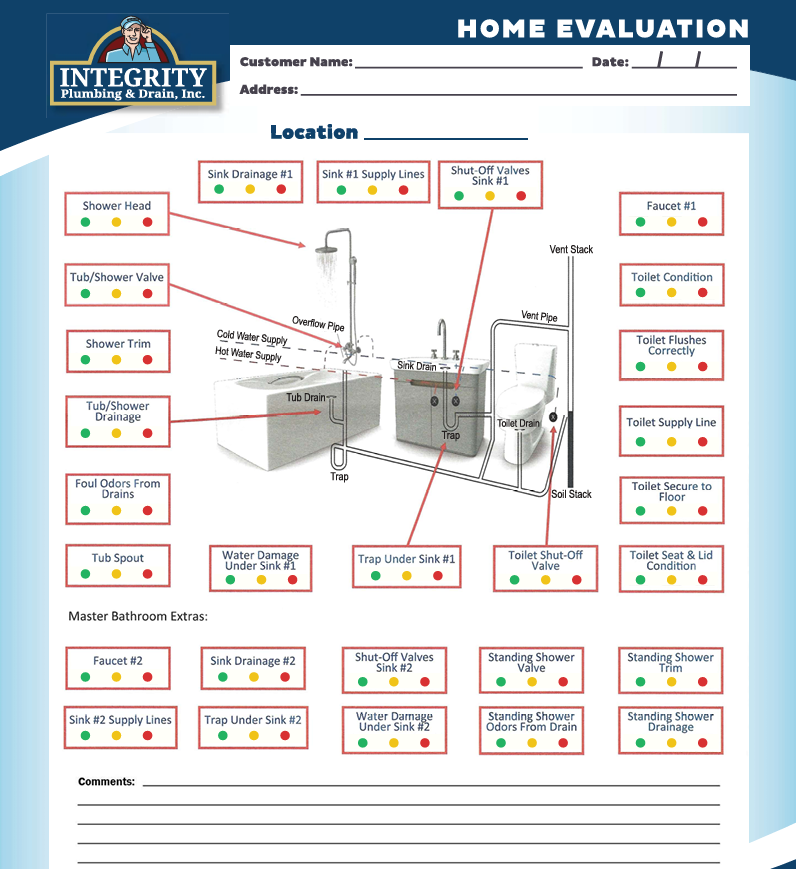
We go through the accessible fixtures in each bathroom:
Shower and Tub
- Shower head checking flow rate and condition
- Tub and shower valve does it mix hot and cold properly? Any stiffness or dripping?
- Shower trim the escutcheon plate and handles. Loose trim can let water get behind the wall
- Drainage slow tub and shower drains are incredibly common and usually easy to fix before they back up completely
- Drain odors that rotten egg smell usually means a dry trap or a vent problem
- Tub spout checking the diverter (the thing that switches water from the spout to the shower head) and looking for leaks
Sinks
- Faucets drips, weak flow, and wobbly handles are all signs of worn-out internals
- Drainage slow bathroom sinks are usually caused by hair and soap buildup in the trap
- Supply lines same deal as the kitchen. These can fail suddenly and cause major water damage
- Shut-off valves tested to make sure they actually shut off
- Trap inspected for corrosion and leaks
- Water damage under the sink we check for the signs most people miss
Toilets
- Overall condition checking the bowl and tank for cracks, chips, or hairline fractures
- Flush performance does it flush completely and fill back up correctly? Running toilets waste thousands of gallons a year
- Supply line the hose connecting your toilet to the wall. Another common failure point
- Secure to the floor a rocking toilet usually means the wax ring seal has failed, which means water is leaking under the base every time you flush
- Shut-off valve tested for reliable function
- Seat and lid we note the condition for completeness
For master bathrooms with double sinks or a separate standing shower, we run through the full checklist again for each additional fixture. While access limitations can occasionally prevent us from reaching certain components, we inspect as thoroughly as possible and document anything we were unable to evaluate.
Who Should Get a Home Plumbing Evaluation?
Honestly? Everyone who owns a home. But here are the situations where it makes the biggest difference:
You are buying or selling a home. A standard home inspection barely scratches the surface when it comes to plumbing. Our evaluation catches the problems that general inspectors are not trained or equipped to find. Buyers get peace of mind, and sellers get the chance to fix issues before they kill a deal.
Your home is over 10 years old. Every plumbing component has a shelf life. Water heaters, supply lines, shut-off valves, wax rings, they all wear out. An inspection tells you what is nearing the end of its life so you can replace things on your schedule instead of in a panic.
You have never had an inspection. If you have been in your home for a few years and never had a professional look at your plumbing, there could be problems developing right now that you have no idea about.
You just dealt with a plumbing emergency. A burst pipe or water heater failure is stressful enough. An inspection of the rest of your system can tell you whether that was a one-time event or a sign that other components are also reaching the end of their lifespan.
What Happens After We Finish?
We sit down with you and walk through our findings. No rushing, no pressure. Our color-coded report makes it easy to see the full picture: what is solid, what to keep an eye on, and what needs attention now.
If repairs are needed, we give you transparent pricing upfront. No surprise charges, no inflated quotes. And since we have already diagnosed everything during the inspection, we can often bundle multiple repairs into one visit to save you time and money.
We never pressure you into anything. We give you the information and let you decide.
How Often Should You Get One?
For most homes, every two years is a good rhythm. If your home has older plumbing, a history of repairs, or runs on well water or a septic system, once a year is a smarter bet.
Think of it this way: a dripping shut-off valve caught during a routine inspection is a quick, inexpensive fix. That same valve failing while you are on vacation? That is water damage, mold remediation, and a much bigger bill.
Ready to See Where Your Plumbing Stands?
Your plumbing system is one of the most important and most invisible systems in your entire home. You depend on it every single day, but almost all of it is hidden behind walls, under floors, and tucked inside cabinets where you never look.
A home plumbing evaluation brings it all into the light.
At Integrity Plumbing and Drain, our Home Evaluation is one of the most thorough plumbing inspections available in West Palm Beach and Palm Beach County. We check your water heater components, kitchen connections, bathroom fixtures, and shut-off valves throughout your home. We document our findings, explain what we see, and give you a clear plan with no surprises.
Call us at 561-310-6435 to schedule your home plumbing evaluation today. Your future self will thank you.